Pages

Monday, September 14, 2015

"Repo Man" (1984), Directed by Alex Cox


Meet Otto (Emilio Esteves), an aimless young rebel stuck in the dredges of an insignificant and unfulfilling lower-middle-class suburban lifestyle. Repo Man chronicles Otto’s journey from “white suburban punk” to the man in the passenger’s seat of a flying neon Chevy Malibu en route to rendezvous with extraterrestrials. Generally ignored upon its release, Repo Man’s freakishly fresh and indisputedly original content has solidified it as a cult classic years later. Its soundtrack, a nostalgic collection of 80’s punk rock, is equally iconic and has garnered a decent deal of recognition in underground pop culture.

The thrashing guitars and resounding aggression of Iggy Pop’s title theme in tandem with the eye-popping opening credits is reminiscent of the chemistry created by Bernard Hermann’s disjointed composition for the frenzied opening sequence in Psycho, and Ennio Morricone’s bombastic score for The Good, The Bad and The Ugly‘s high-octane intro. Much like the aforementioned films, Repo Man maintains its freshness decades later as a classic work of counter-culture cinema.

We are first introduced to our protagonist Otto when gets himself fired from his job at a generic supermarket for flagrant insubordination. His boss, Mr. Humphries,  muses on about how a young man his age in these uncertain economic times should be more appreciative of his “opportunities.” In a historical context, Humphries is a stereotype of some of the historically unlikeable ranks of authority figures from Otto’s oppressing generation: consistently preaching morality while both a byproduct and member of an equally morally bankrupt society. Otto’s expresses his “rebel without a cause” attitude with a two-finger salute and a bravado “**** you.” He is clearly not cut from the same societal cloth as his prior generation, nor does he abide with the conservative ideologies they represent.

“There’s f***ing room to move as a fry cook, man.”
Oddly enough, aside from his initially congenial chemistry with Bud (Harry Dean Stanton), Otto does not have any true friends in the film; his “girl doll” Leila included. Perched on a stair step during a heavy downpour donning a ridiculous umbrella-like hat, Otto relates a dream to one of these arbitrary acquaintances Kevin. In the dream they are both old and working in a “sleazy shit hole motel,” a subconscious expression of Otto’s reservations about his future. Kevin retorts with comical conviction that there is room to move as a fry cook (“You know I can be manager in two years… king… God”).

"I blame society."
Kevin is one of the many characters that set the stage for a society of low standards too tiny for Otto’s ambition–or paradoxically, the lack thereof. In order to escape the banality, Otto reluctantly seizes an opportunity to join what comes to be a hyper-realistic breed of repo men/woman, soon to become entangled in screwy semantics surpassing the barrier of humankind. Bud preaches to him, “the common man spends his time avoiding tense situations. A repo man spends his time getting into tense situations.” He even states a code that he abides by, the “Repo code,” with enthusiastic conviction… after snorting a line of speed. Bud is clearly dedicated to his job and wants to take Otto under his wing.

Initially opposed to the societal role repo men represented, Otto soon finds himself a convert when he is handed a wad of cash. He is metaphorically taking back what his predecessors have ascertained (with or without integrity), granting him a sense of self-entitlement over his oppressors. Despite this unseemly path of self-indulgence, Otto’s whimsical aura makes him a likable hero.

"ZAP!"
Otto’s occupation as a repo man introduces him to an exciting and equally seedy subculture of car thieves, government officials and extra-terrestrials; a stark contrast to his lackluster start in suburbia. “Real life car chases?! Cops and robbers?! I never knew being a repo man was this intense!” Otto exclaims after an unpleasant encounter with repo rivals “The Rodriguez Brothers.” Bud triumphantly shouts “the life of a repo man is always intense!”


Repo Man is a rare film. It is both funny and captivating, simultaneously satirizing and embracing 80’s punk culture; always original with a memorable rockin’ soundtrack. I would never hesitate to recommend this offbeat/oddball film to anyone. Alex Cox’s directorial debut is without a doubt his strongest achievement.

Overall: 9.1/10

Thursday, September 10, 2015

"It Follows" (2015) Review, Directed by David Robert Mitchell

It Follows, when condensed to its smallest molecule, is a about a disease transmitted through sexual encounters which cause both horrific and deadly hallucinations. Basically a blatant metaphor for STDs. However, it would be doing a great injustice to simply judge the film by this logline. 

Despite the silly sounding premise, It Follows is fascinating. It pulls this incredible stunt with heavy props to fledgling director David Robert Mitchell's vivid vision which plays out to the rhythm of a rusty old metronome. It walks the brink of exploitation, tip toeing dangerously around hokey zones but ultimately manages to circumvent the hurdles of conventional horror roadblocks. 

Personal opinions aside, it can hardly be denied that speaking technically from a filmmaking perspective there are many moments of brilliance. Sound, image, music, editing, acting—everything seems to work so perfectly in tandem with each other. CGI is rarely used for the legitimate scares, and is only utilized when entirely practical.

The elaborately planned shots make for some of the best in recent cinematography work. Much alike the cinematic style of Kubrick's The Shining, many of the shots are almost perfectly symmetrical. The throbbing guttural soundtrack (slightly resembling Ennio Morricone's score to The Thing with their heavy usage of the Moog synthesizers) helps to punctuate critical moments and emotions. All of these elements successfully make for killer creeper cinema.


The narrative is heavily propagated by America's current taboo perspective on sexual content and its historic correlation with horror movies. The narrative also aptly fits in layered elements of romance, companionship, moral dilemmas and trust/betrayal. The character dynamics are relatively formulaic yet solid and convincing. A very small percentage of the audience will walk away unfazed by this bizarre horror flick, but the majority will be enthralled with its balls to the wall weirdness, ace acting, music and everything else that makes for a crafty film.

In essence, It Follows is a rather simple film with a simple premise. Perhaps its predominant beauty lies in its simplicity. It Follows captures much of the spirit that seems to be missing in the void of modern horror cinema. No doubt both the director Robert Mitchell and lead actress, Maika Monroe, as well as much of the staff will go on to lead very successful careers after this achievement.

OVERALL9.0/10

Tuesday, September 8, 2015

Eraserhead: A Masterpiece of 70's Cinema

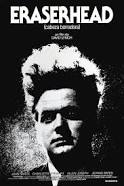
Eraserhead Poster
One film screening that will always stick to me like sickeningly sweet candy is David Lynch's Eraserhead. Lynch's penchant to remain tight-mouthed about any questions raised by critics and fans is both infuriating and satisfying. In fact, part of what makes Eraserhead so fascinating is its impenetrability, where the answers lie just out of reach.

My reason behind writing this is to defend Eraserhead's status as a masterpiece of cinema and eradicate any claims of it being nothing but incoherent trash. Having found a wider audience and more acceptance in the recent years of blu-ray releases (especially on Criterion), this film is finally receiving the kind of recognition it deserves as a masterpiece and historically important cinematic achievement. Eraserhead has been praised and condemned by audiences and critics alike, and it can hardly be called an accessible film. Nonetheless, it is a work of startling originality.

In order to accept it on its most basic level, Eraserhead is a surreal representation of a nightmare. Rarely has a film so successfully captured the ambience and feeling of a disturbing dream. Most virgin viewers feel a sense of strong discomfort due to the absence of familiarity in the Eraserhead world. This feeling of dissociation can often be off putting, and for a film to create such a powerful dissociation from reality is a rarity indeed.


Eraserhead Screen Shot
There is no denying the sheer power behind Lynch's filmmaking. Eraserhead is anything but forgettable—the imagery is consistently repulsive, often without being overtly grotesque. The atmosphere created in the film is like no other. Lynch effectively creates a world of his own, a reflection of the Henry's (and likely some of Lynch's) psyche.

An often overlooked aspect of Eraserhead is its ingenious sound design. The soundscape is a cacophony of white noise, buzzing and industrial machinery, a concept that would make its way into Lynch's next and much more accessible feature The Elephant Man. The marriage of sound and image produces something that comes across as fierce and unsettling. During those rare moments of absolute silence, the viewer is left with a very empty and eerie feeling. In some instances, namely the lovemaking scene between Henry and the "Beautiful Girl Across the Hall," miscellaneous tones and noises (all recorded by Lynch and coworker Alan Splet via unorthodox methods) are layered to form a melodic and soothing, almost angelic ambience providing a stark contrast to the droning soundscape.


Eraserhead Screen Shot
"WTF?" says Henry.
And audiences.
In the midst of all the macabre lies a touch of ironic beauty. In the protagonist's radiator dwells a lady with chipmunk cheeks, appropriately billed as the "Lady in the Radiator." In the latter part of what is one of the most peculiarly chilling sequences ever presented on the silver screen, the Lady in the Radiator sings a sweet lullaby tune titled "In Heaven" (covered by over a dozen bands including "The Pixies"). Simultaneously dark and beautiful, this resonating melody can be interpreted as a beckoning toward death, or absolution for Henry.

Detractors have often criticized the film as being "weird for weird's sake." It is impossible to argue that this film is not "weird," but to merely dismiss its strangeness as a director's pretentious gimmick would be shortchanging yourself of a highly unique experience. Eraserhead is charged with universal human emotions of guilt, fear of responsibility, and themes of parenthood, reproduction, infanticide and death to name a few. Audiences who need be spoon-fed plot and theme will likely find Eraserhead a frustrating experience, but those willing to dig deeper below the surface will find it to be an immensely gratifying and unmatched trip into the dark depths of the subconscious psyche.

If you have never seen Eraserhead I strongly encourage you to do so, if not just for the experience in itself. If you have seen Eraserhead and hated it, you have my full understanding, but I hope after reading this you have the inclination to give this bizarro cult-classic another shot.

10/10: A fine example of damn near cinematic perfection.


NOTE: This is not so much a trailer as it is the display of the more-or-less famous and truly grotesque chicken scene.

Monday, September 7, 2015

Dario Argento's "Deep Red" Review & Analysis

Deep Red (Profondo Rosso) Poster
Italian slasher gore-fest director Argento practically coined the film genre of Giallo (Italian for “Yellow,” although I am unsure of its roots), a leading figure in a cinematic movement of excessive gore and overtly "terrifying" segments. One of the real standouts of this genre is Deep Red, an intensive exercise in psychological horror, mystery, voyeuristic camerawork and full of trademark Argento moments which distinguish him as a visual mastermind.

A single screening is not sufficient. Deep Red demands a second look, like any clue in a mystery. Fascinatingly enough, the image of the killer is revealed at the very beginning. Argento plays the game of red herring so meticulously and intelligently in this film, it is entirely difficult to discern what and who to believe from the protagonist's point of view. Not a single individual I have spoken to about the film, myself included saw this early expertly concealed connection on our first viewing.


In fact, toward the end of the film's third act, just like the protagonist (played expertly by British superstar David Hemmings, who will later be mentioned in an analytical connection) forgets and neglects the clues we have been given the whole time. One of the film's most important supporting characters, Carlo, hints to Marcus Daily (Hemmings) from the very beginning that he most likely has seen everything he needs to crack the case. Many of us observe on a frequent basis from such a distance that our perceptions can be clouded with inherent prejudice and deceitful visual associations, Marcus included.


Deep Red (Profondo Rosso) Screen shot
As well as other key components, Deep Red covers many societal issues, rather a rarity in the Giallo sub genre. Because of its numerous facets and captivating narrative, Deep Red is without much doubt a film deserving of five stars, tantamount to a unique perfection personified at the dawn of the director's cut, in which Marcus gets on his soap box and announces that the group of musicians is “too perfect.” That the music was invented in brothels and needs to be more... sloppy, a common metaphor once again for this distinct genre.

Thrillifying, vilifying with excess in the manner which makes the film a metaphorical labyrinth, this is a sure standout film which is sure to both enthrall fans and frustrate other audience patricians, it is only appropriate to laude this film with praise of which many share.

Further Analysis


Deep Red (Profondo Rosso) imagery comparisonsAnother aspect that struck me as rather interesting was the parallel between Italian director Michelangelo Antonioni's "Blow-Up" which also coincidentally starred David Hemmings. Spanning near a decade apart (approximately nine years), the theme of trickery and a fragile reality in which such essential elements fleets the conscious mind, the "nothing is as it seems" approach, is arguably one of the main themes of "Blow-Up." Carlo, as prefaced to be a key character tells Marcus that "his mind plays tricks on him all the time."

In Blow-Up, Thomas is involved in a situation which also involves a murder, albeit one of a different nature. It must be stated that Deep Red is not merely a copycat of Blow-Up. There are many startling similarities which may or may not have been intentional, but it would be a carriage of mis-justice to dismiss Deep Red as a "copycat film."

Another important observation I have conjured is Argento's tweaking of gender roles and stereotypes of what seem to be a universal misconception where females are incapable of the brutality, savagery acts of which violence is statically and primarily associated with the male race. This was a twist present in his first major film “The Bird With Crystal Plumage,” a comparably weaker attempt than Deep Red which almost shines light on the director's evolution (before Argento's almost unanimously acknowledged de-evolution into total cheese).


Deep Red (Profondo Rosso) Imagery Motifs & Red HerringsSome of these misconceptions of gender roles appear as early as the killer attending the men's room in which we see but a dirty, incomprehensible reflection of the killer in the mirror. Argento also plays a more light-hearted role, or rather “battle of the sexes” between Gianna and Marcus. One of the films more playful scenes involve an arm wrestling match between Gianna and whom she sarcastically addresses as “Tarzan.” The humour continues in moments such as in Gianna's car where Marcus's seat collapses down due to the car's disfunction, visually implying and asserting that in her car she has the right to dominance over the male species, or anyone for that matter.

Another topic which popped up frequently enough to warrant attention along with gender roles in society was the clear distinction of societal class. Early in the narrative Carlos drunkenly “expands his philosophies” by distinguishing Marcus as the “bourgeois of music” while he was simply the “proletariat.” One for art and love of music and one for survival, a shared occupation between the two while on significantly alternate life paths. Later a cop mocks Marcus when asking him his profession (“music”) and repeating “what is your real profession?” 


"Something important!"
Deep Red is essential viewing for anyone with even a small taste for the broad and often garbaged up blanket “horror” genre. It is Argento's most intelligently crafted film, aside from Suspiria which still lacks some of the narrative depth Deep Red provides. With the exception of a few miniscule moments that falter awkwardly, this is that almost picture perfect painting of what Giallo films often strive to achieve.

9.8/10

* As a caveat I must mention in this analysis of connections between Deep Red and Blow-Up, the discovered parallel which I initially felt was so astute, was also covered in a commentary, which I am unsure of which was official or added as an extra track (if you ever somehow read this contact me to give due credit, even though I promise I never stole from you). Having discovered this fun little easter egg before listening to a commentary, I wanted to pull my hair out having someone make this discovery of connections prior. This is one of the reasons I try not to read other review material, as it is a dangerous step toward unintentional plagiarism. I could not in fairness dis-acknowledge details which plagued my original approach to this analysis.

Friday, July 10, 2015

"Hausu" (1977), Directed by Nobuhiko Ôbayashi

Nobuhiko Ôbayashi's surreal and psychedelic satirical scare fest was the most startlingly strange film to still follow a linear storyline, and still to this day remains a complete and utter anomaly. This is particularly with American audiences who are not used to witnessing such schismatic entertainment when it comes to defying, while simultaneously defining genre.

Hausu successfully utilizes simplistic horror formula while bucking the system with its highly unorthodox editing, transitions, compositions, arrangement and juxtaposition techniques... all an implication that Nobuhiko was in fact a cinematic genius despite his lack of notable follow-up successes sadly.

The music is another great accomplishment--as simplistic as the narrative's formula. In fact, the reciprocal would be a more appropriate statement--the narrative's formula is as simplistic and enthralling as its theme music, which effortlessly carries this psychedelic rowboat across the turbulent sea of treachery which takes place in the film's content.

The word "formula" in this review connotates a reference to something tried and true throughout the ages. This can be either a good thing when executed expertly, or a downfall if utilized as a lackadaisical method to produce a "money maker." Hausu is far from the latter. In fact, it may be a difficult watch for most American audiences due to its jarring differences in cinematic creation.

The cinematography and editing in particular stand out like a sore thumb. Its formulaic nature is very self-aware in the sense that the film understands its relatively simple nature. Even the character names are explicitly derived from their character traits (Gorgeous, Fantasy, Prof, Kung-Fu, etc.). This is, of course taking into consideration the translation factor, but this review refers to the Criterion release. Criterion, being famous for their meticulous attention to detail including translating the film's intention and purpose I can trust.

A reasonable percentage of Hausu's audience, who undoubtedly search for more treasure with horror candy have seen Sam Raimi's famous American cult hit Evil Dead II, another self-aware horror comedy which takes stereotypical elements and makes light of them at risk of being its own self critic. There are scenes that are so over the top they become simply funny. This approach is an extremely risky direction to take, and both succeed equally as well.

In fact, the Evil Dead II has uncannily similar scenes which may or may not have been denied or admitted by Raimi as an inspiration. There are several comparable scenes, such as holding the talking severed head, the dancing skeleton and excessive fountain of blood squirting from a hole in the wall. Raimi himself has acknowledged (in paraphrase) that filmmaking has somewhat "evolved" for better or for worse out of "borrowing," a politically correct phrasing of hijacking essentially. This is in fact a true statement throughout film history, a medium chock full of references, tributes and copycats.

Despite its lack of high-end complexity narratively speaking within the script itself, the director's highly enigmatic interpretation (though he was himself the writer, allegedly based on a dream his daughter once relayed to him... terrifying) and execution is one of the most original, enthralling, and engrossing repeated viewings I have personally had.

I recommend this film with a solid 9.7/10 largely due to its sheer boldness and originality, so rare in filmmaking these days. Many readers of this review who decide to view the film themselves will likely find it an unforgettable experience. From the top of my head of writing this review and completing my approximate 5th viewing, I have yet to see another film as iconoclastic and dissident in the horror genre this side of Santa Sangre (1989, Alejandro Jodorowsky).